Snoqualmie Tribe Child Development Center Renovation
Snoqualmie, WA
Known as the People of the Moon, the Snoqualmie Tribe envisioned an addition to their existing childcare facility to support the Tribe in teaching their children and community about their culture, food sovereignty, Tribal crafts, local plant cultivation, and community gathering.
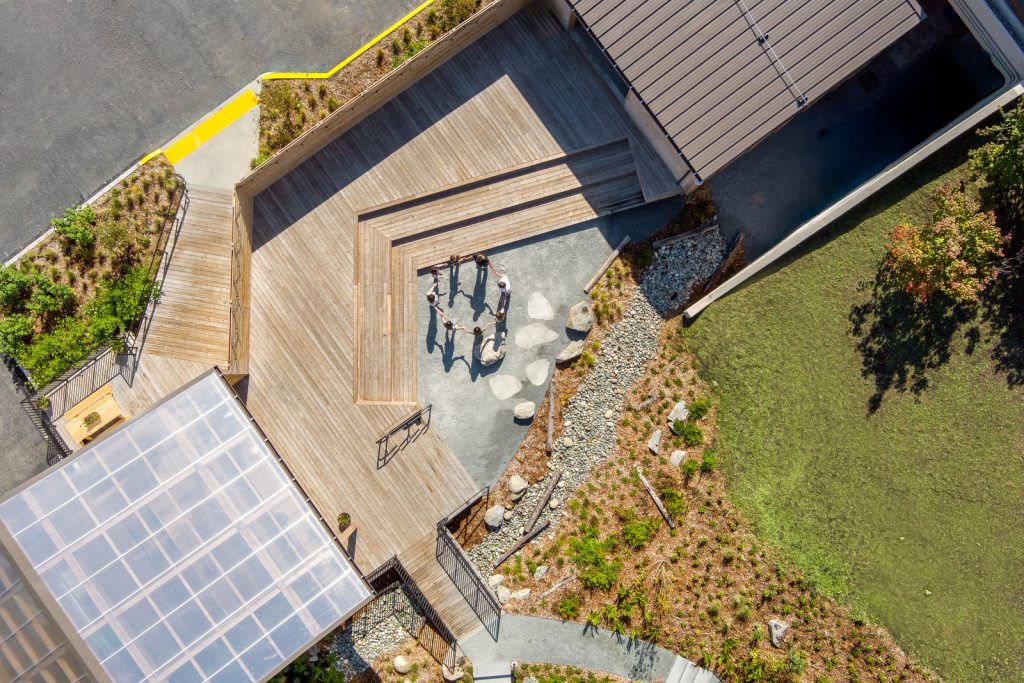
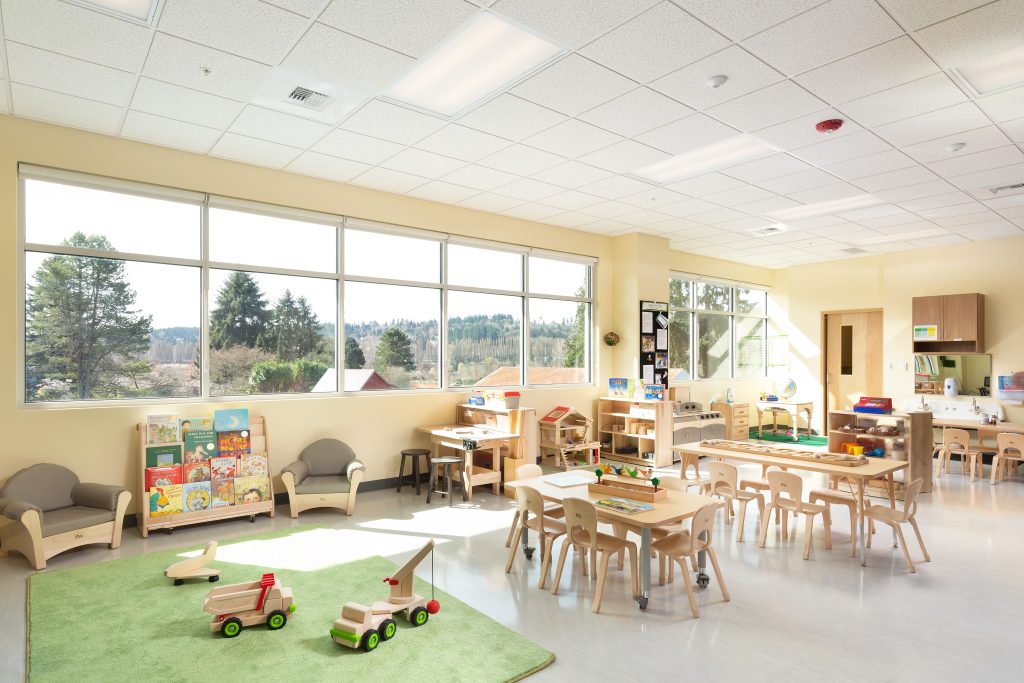
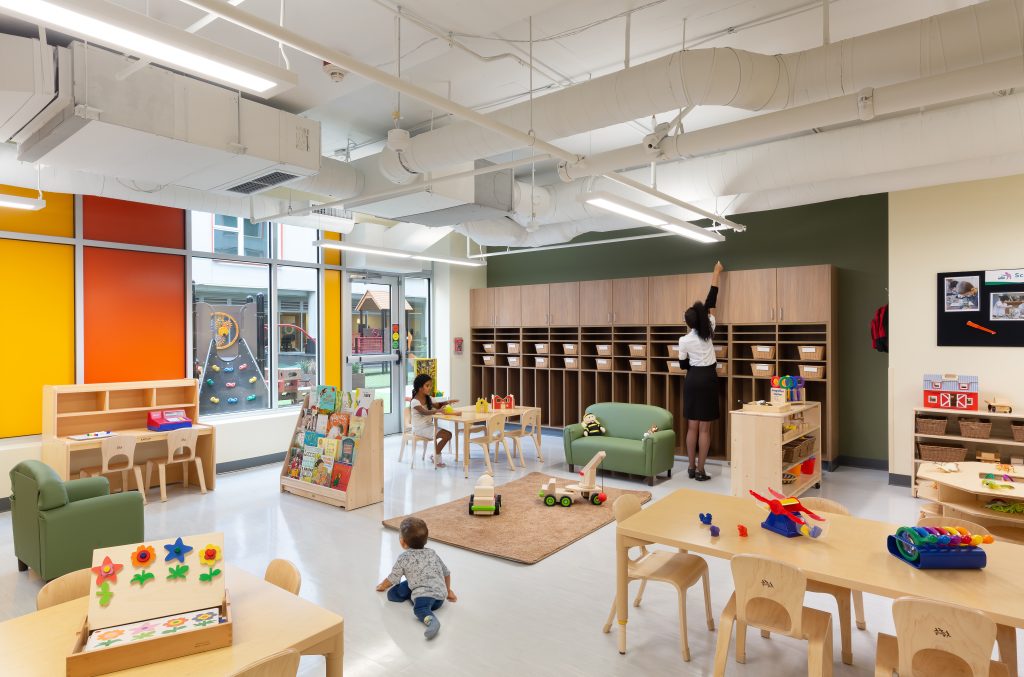
Located on the sovereign land of the Snoqualmie Tribe, the center’s program includes a licensed childcare facility (existing); a cultural classroom and educational game processing room (renovation); and an outdoor harvest kitchen, gathering area, and teaching greenhouse (new). A new orchard and other native landscaping support the program.
The Tribe’s mission of food sovereignty and cultural continuity was central to the design process. The team engaged in extensive listening and visioning sessions with Tribal representatives and the Tribal Council, ensuring that the architectural vision reflected the Tribe’s desire for a space that honors past, present, and future generations. This resulted in features like the elk processing room with a viewing portal for educational purposes, harvest kitchen to host traditional salmon bakes, and the integration of a greenhouse and rain gardens planted with culturally significant species such as Wapato. Each space was designed for maximum versatility, with features such as height-adjustable tables to support both child and adult learning.
The outdoor harvest kitchen encourages indoor-outdoor flow from the building and steps out to a raised deck with seat steps angled towards views of the adjacent forest; a new rain garden feature collects stormwater from the harvest kitchen and greenhouse roof. The use of native plants was a non-negotiable aspect, driven by the Tribe’s environmental stewardship and supported by their Environmental and Natural Resources Department. The landscape design became a collaborative, design-build partnership with the Tribe, further rooting the project in local ecological and cultural practices. The greenhouse classroom, water collecting cistern, and rain garden serve as educational tools, fostering environmental stewardship and hands-on engagement.
The elk and game processing area unfolded from a visioning session between the design team and the Tribe’s head hunter, during which the team learned the process of the traditional hunt, from preparation to Tribal game processing techniques. Drawing inspiration from Coast Salish traditions, notably the Cedar Plank House, the project design features an exposed cedar structure that double as drying racks for bark, herbs, and hides. Other materials used in the project were designed to align with Tribal colors and layered into patterns that emulate traditional basket weaving, creating tactile connections to Tribal artistry. Flexible layouts echo the utilitarian beauty and multifunctionality of traditional plank interiors, and cedar detailing brings texture and beauty to the spaces, while being strong enough to keep out large wild animals.
Throughout the project, the Tribe’s values of community, resilience, and reverence for nature were honored. The result is not only a place for childcare and education, but a living narrative where Tribal stories and cycles are woven into the built environment, supporting intergenerational learning and the continuation of traditions.