Sutter Pacific Medical Foundation Primary Care 350 Rhode Island
San Francisco, CA
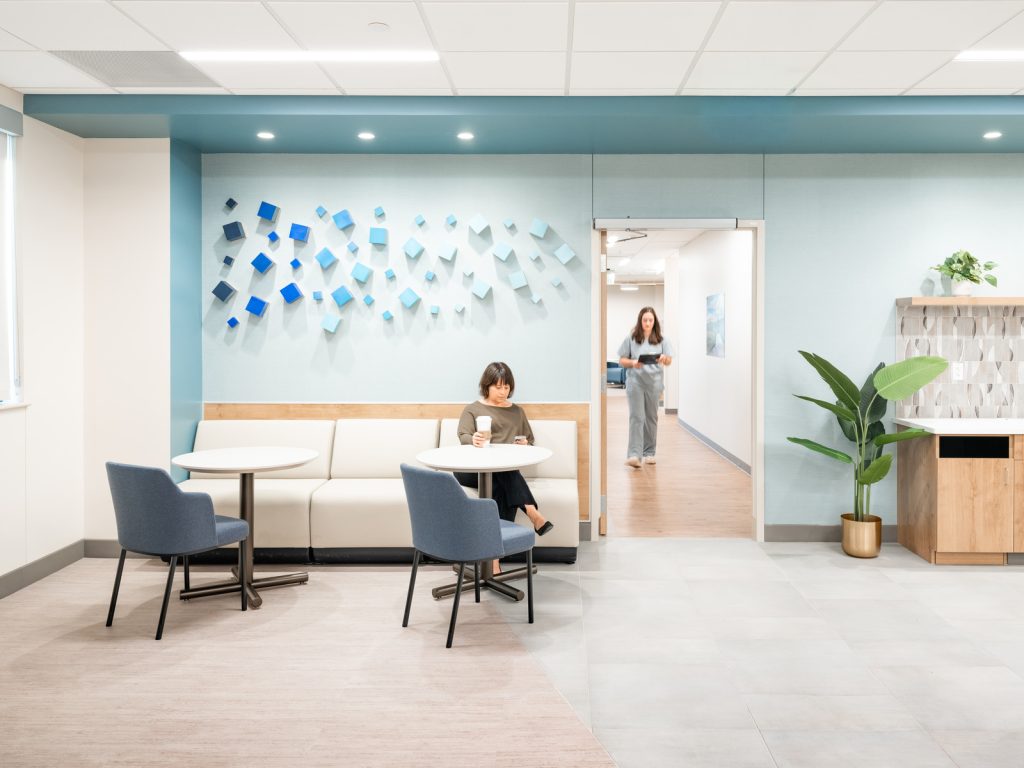
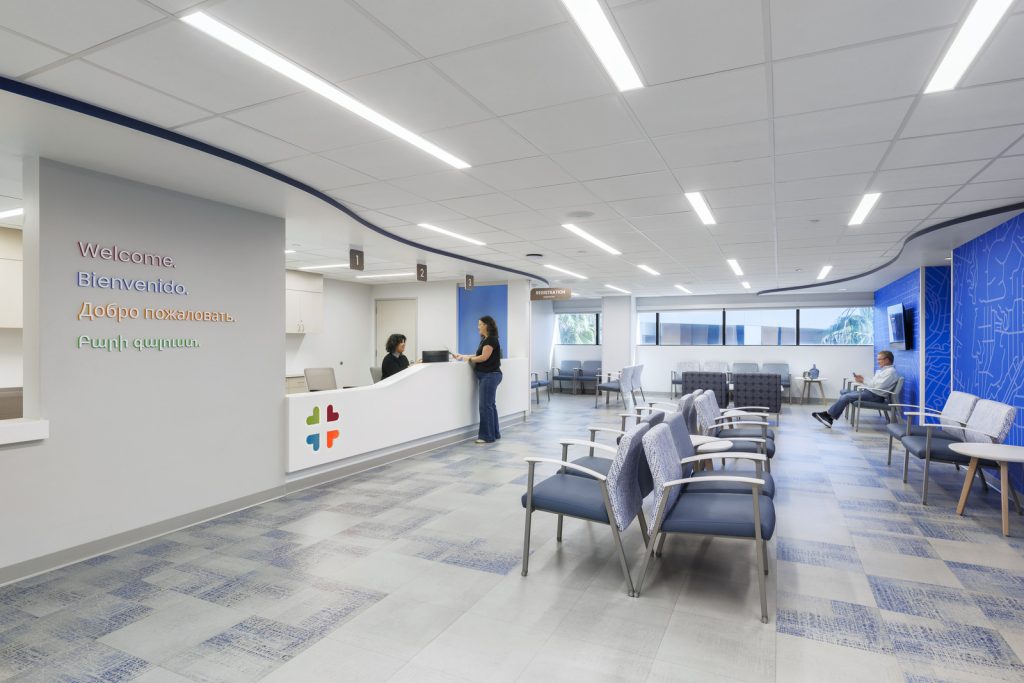
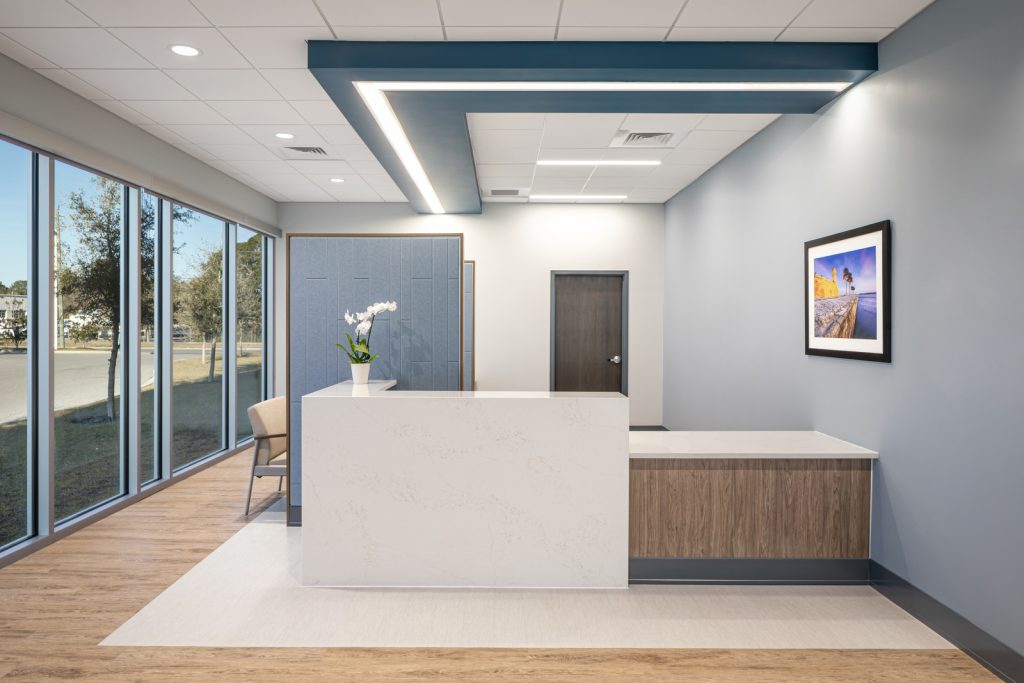
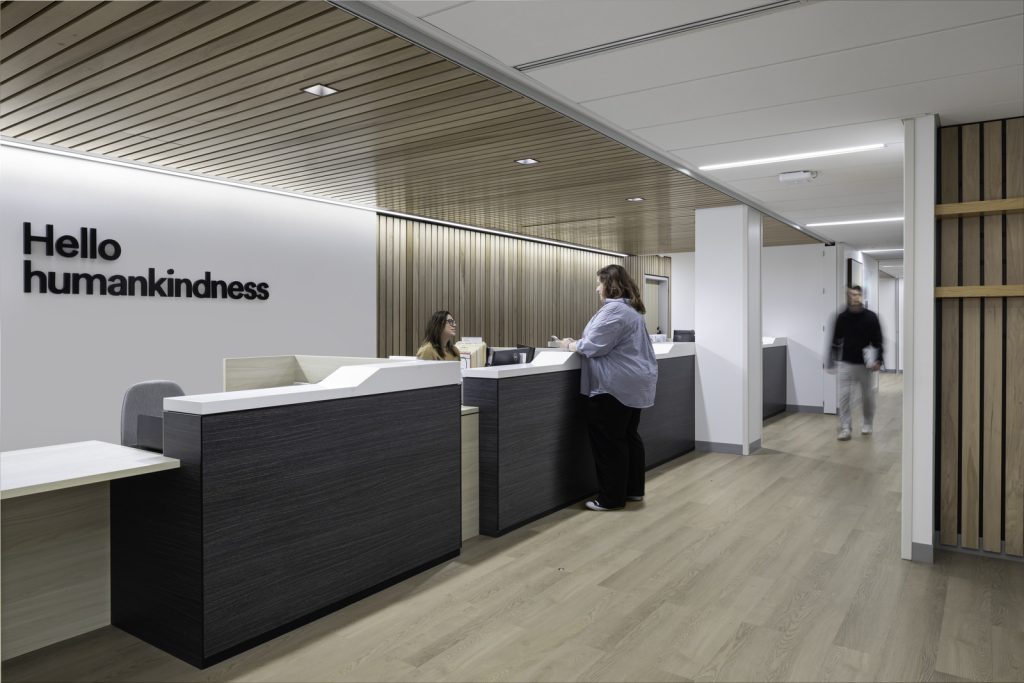
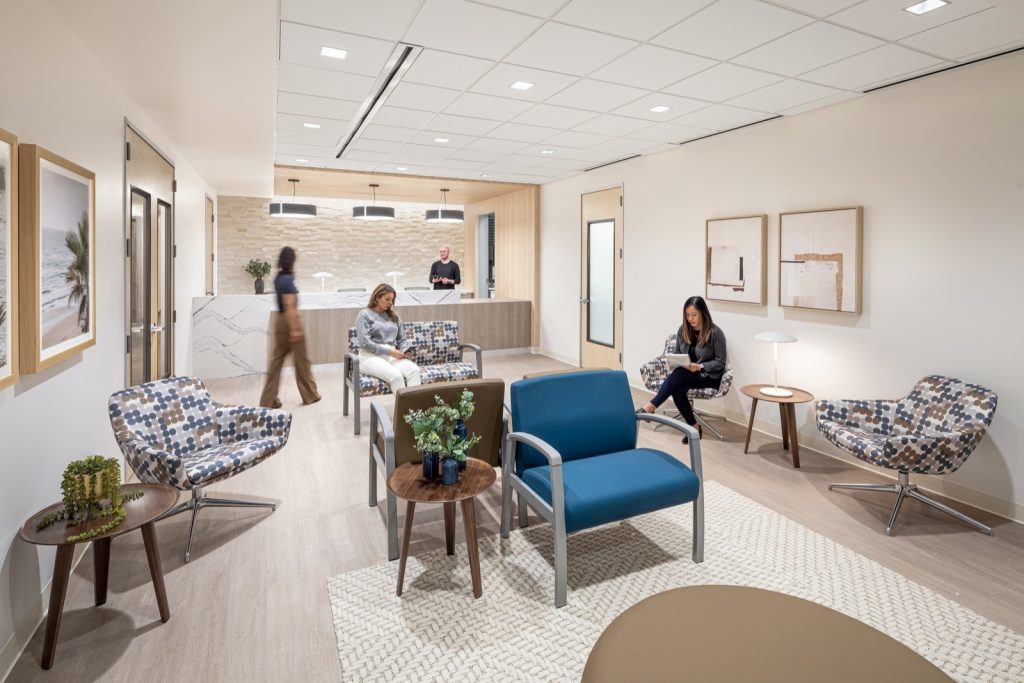
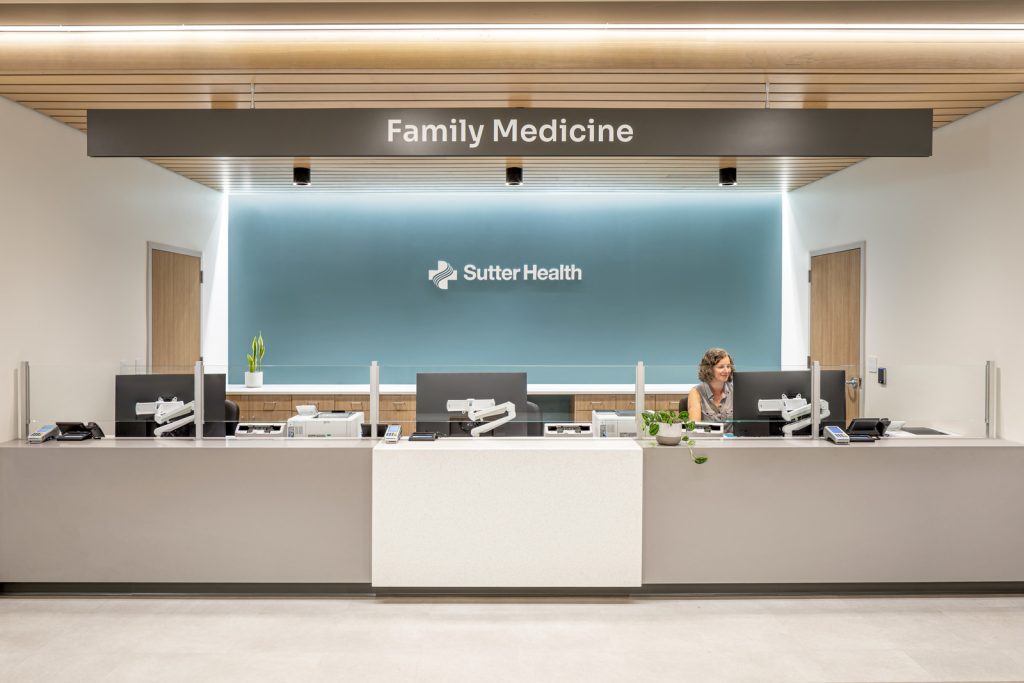
The Sutter Pacific Medical Foundation Primary Care clinic at 350 Rhode Island Street is a 9,500-square-foot space located within a four-story office building in San Francisco’s Dogpatch neighborhood. The project expands access to primary care by linking a new clinic with an adjacent, fully operational location, allowing both spaces to function as one cohesive clinic. A centralized reception and waiting area were combined to create a centralized patient entry experience, while a new internal connection improves both staff circulation and patient flow. An expanded blood draw area includes two draw bays, one private draw room and a specimen toilet, all designed to support shared access to centralized lab processing.
Working within an existing office building required thoughtful coordination with structural elements essential to the building’s integrity, including a pre-stressed slab and exposed concrete structural columns. Rather than try to work around it, the design team incorporated this feature into the clinic’s interior environment. The exposed concrete introduces texture and visual interest while reinforcing the building’s original architectural character.
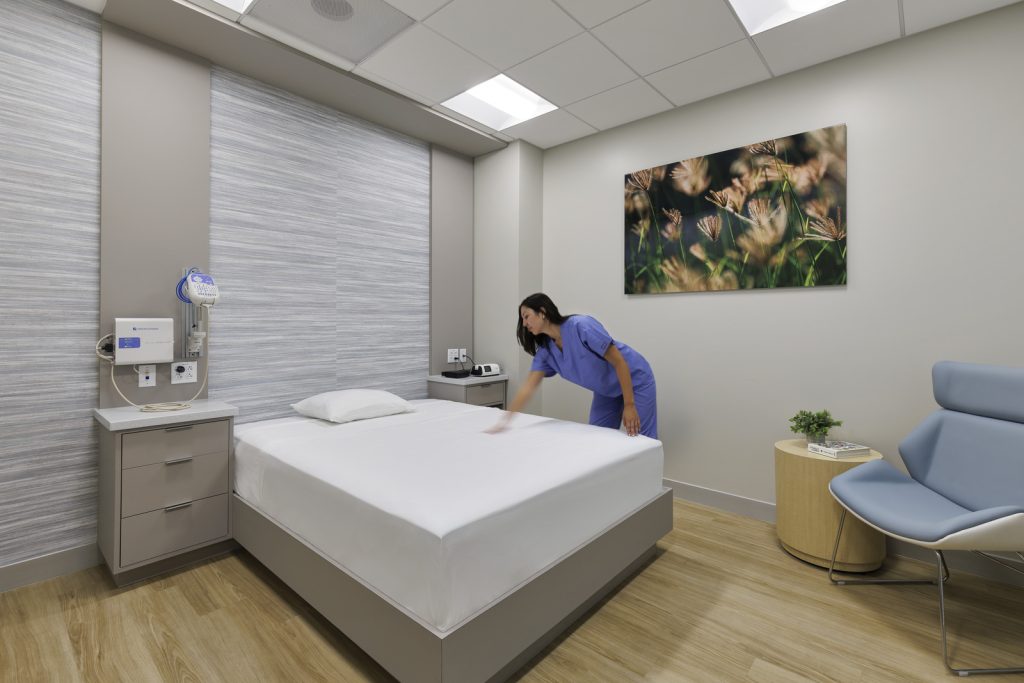
The primary care program includes 18 exam rooms, two exam-plus rooms designed to accommodate additional equipment and care team support, and one treatment room, all organized along intuitive patient corridors. This layout maximizes flexibility and supports a one-stop shop model of care. Standardized exam room layouts allow physicians and care teams to share spaces efficiently throughout the day. Centralized reception and support spaces, along with strategically placed med prep, clean and soiled utility rooms, enhance operational efficiency and team-based workflows. Through careful phasing and coordination, the expansion was integrated while maintaining continuous patient care. The result is a unified primary care and lab environment that increases physician and care team capacity, improves patient access, and delivers a cohesive clinical experience within an existing urban building.